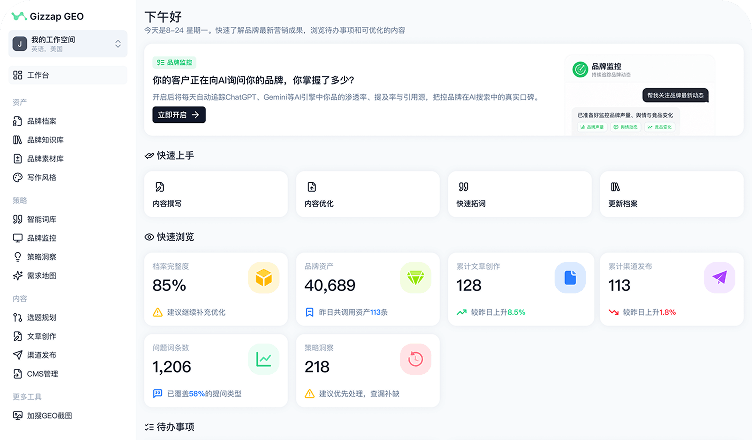
Scattered material slows research
Product information, cases, and assets are spread across tools, so the team often has to assemble several sources before creating content

Customer Demand & Question Research
Gizzap uses your product and business knowledge to map customer roles, use cases, and decision stages, then turns them into specific questions. Teams use the question library to define monitoring scope, find content gaps, and plan topics
When research expands only from product names, it overlooks the questions customers ask while comparing options, validating outcomes, and moving a purchase forward
Product information, cases, and assets are spread across tools, so the team often has to assemble several sources before creating content
Users, evaluators, and procurement teams may need entirely different information
Without customer-role and decision-stage context, teams cannot tell which needs are covered
How Gizzap helps
The demand map explains the customer journey, while the question library identifies what matters at each stage. Together they show who each question serves and why it deserves an answer
The demand research agent uses brand and business knowledge to map the concerns of buyers, users, and influencers
The agent studies how customers move from recognizing a need to comparing and validating solutions, capturing questions at each stage
The question library groups specific questions by topic and identifies the product information, cases, or evidence needed to answer them
Teams can compare existing content and monitoring data to see which questions have answers and which still lack content or evidence
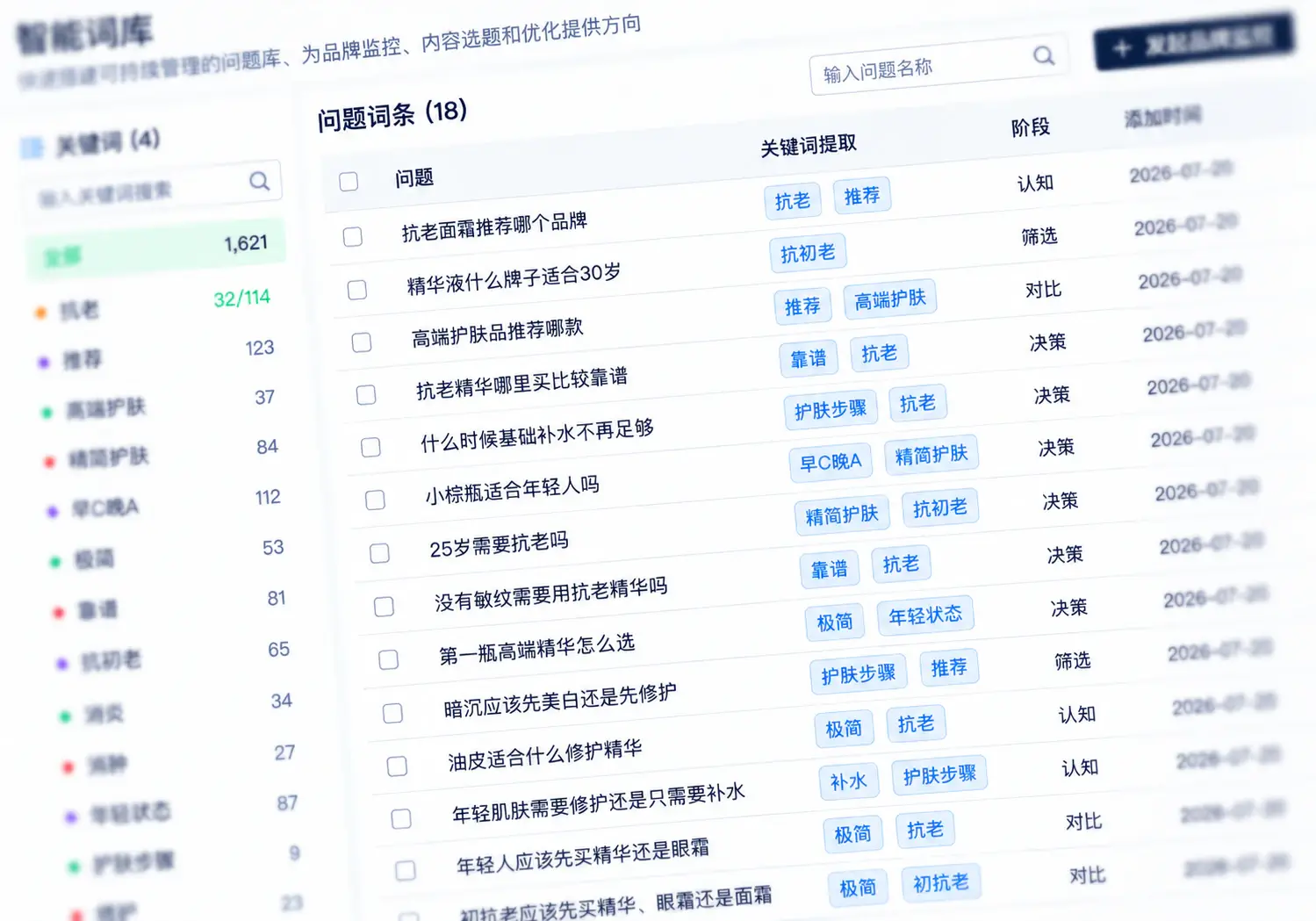
Organize roles, decision stages, and real questions into a clear scope for monitoring, strategy, and content planning
Use product knowledge, target markets, and working languages to define the scope
Organize scenarios, concerns, and evidence needs by role and stage, marking assumptions that still need validation
Turn research into concrete questions organized by topic, scenario, and decision stage
Use monitoring, analysis, and business feedback to add questions and refine the demand model
Take workplace furniture as an example: one product overview cannot cover every information need in the buying process
Is the sit-stand desk stable and comfortable for long sessions?
How are bulk delivery, installation, and after-sales support handled?
Is the price difference justified, and what cases or evidence support the choice?
The question library is one output. Gizzap also connects each question to customer roles, scenarios, and concerns so teams understand why it matters
Not necessarily. Some questions come from agent analysis of brand material. Gizzap distinguishes research inferences from observed monitoring evidence; these questions do not represent verified search volume or interview findings
Add business context and corrections. Once the updated demand map is confirmed, future research and content work uses the new version
See how Gizzap builds a demand map and question library from your products and customers